Three Acts Is Not a Formula, It Is a Diagnosis
Structure templates get a bad reputation because writers use them as blueprints. They are far more useful as diagnostic tools applied after a draft exists.
By Robert Shumake · · 2 min read
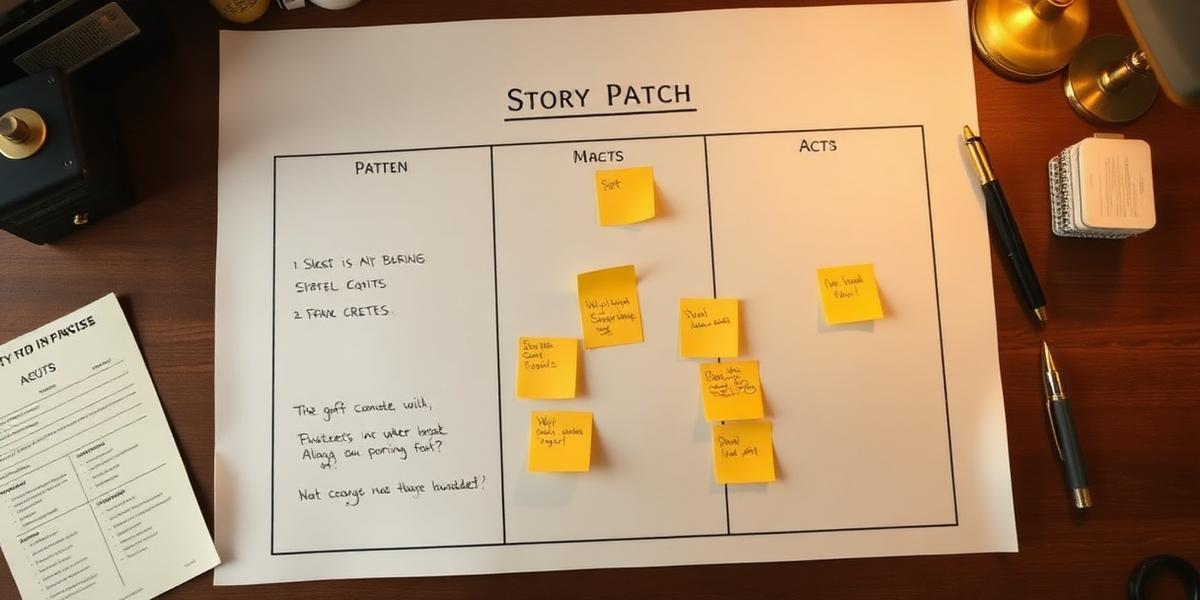
Structure advice attracts two camps: writers who follow a template to the page number, and writers who insist that any template is a betrayal of art. Both are treating the model as a blueprint. It works much better as a thermometer.
Blueprint versus diagnosis
Used as a blueprint, three-act structure tells you what to write next. That is where it does damage — the draft comes out obedient, hitting its beats on schedule, and completely uninhabited.
Used as a diagnosis, it tells you what is wrong with a draft you already have. That is a different and much more reliable use, because the model is descriptive. It was reverse-engineered from stories that worked. It is a summary of a pattern, not a law.
Nobody ever wrote a good novel by hitting the midpoint on time. Plenty of people have fixed a bad one by noticing that they never had a midpoint at all.
The three questions I actually ask
After a full draft, I ask three structural questions and ignore everything else.
Where does the protagonist lose the ability to go back? If the answer is "chapter twenty-two," the first act is too long. If it is "never," the book has no engine — the character can walk away at any point and the reader knows it.
What does the middle cost? A saggy middle is almost never a pacing problem. It is a price problem. The character is pursuing something and it is not costing them anything yet. The midpoint is where the price becomes real, whether or not it happens at the exact centre.
Does the ending answer the question the opening asked? Not the plot question — the emotional one. If your first ten pages set up whether a man can forgive his father and your last ten pages resolve a lawsuit, you have written two books.
What to do with the answers
Fixing structure is usually removal, not addition. A first act that runs too long is almost always the same problem repeated three times: three scenes establishing that the marriage is strained, when one would do and two feel like the book is stalling.
- Merge scenes that make the same point
- Move the point of no return earlier than feels comfortable
- Raise the price in the middle rather than adding events
- Cut the final chapter and see whether the one before it ends the book
That last one works far more often than it should.
On outlining
None of this is an argument against outlining. Outline if it helps you start. Just do not confuse the outline with the diagnosis. The outline is a guess about a book that does not exist yet. The diagnosis is evidence about one that does.
Write the draft however you can. Then bring the model out, ask the three questions, and let it tell you where the pressure is missing.
Stay connected
One teaching on consciousness or ancestral wisdom, one note from the desk, and early word on new books from the Living Archive Series and the Ajarn Shaman Shu collection. No spam, and one click to leave.
Related reading
More from the archive connected to “Three Acts Is Not a Formula, It Is a Diagnosis”.
- Writing Craft & TipsRevision Is a Different Job Than WritingDrafting and revising use opposite instincts, and most writers try to do both with the same brain. Here is the four-pass system I use to keep them apart.
- Writing Craft & TipsThe Sentence Is the Unit of TrustReaders do not decide whether to trust you at the end of chapter one. They decide in the third sentence. Here is how I audit prose one line at a time, and why rhythm matters more than vocabulary.
- Book UpdatesThe Third Book Has a Title (and a Cover)After eighteen months, two false starts, and one abandoned first-person draft, the next novel finally has a name. Here is the title, the cover, and an honest account of what took so long.
- Author's JourneyThe Long Middle: Writing When Nobody Is WatchingEveryone prepares you for rejection and for launch day. Nobody prepares you for month seven of a first draft, when the book is too big to hold and too unfinished to show anyone.
- Industry NewsWhat the Backlist Boom Means for New WritersOlder titles are taking a larger share of sales every year. That is not just a statistic about catalogues — it changes what a debut needs to do, and how long a book has to find its audience.
- Writing PromptsFive Prompts for a Scene That Refuses to MoveNot prompts for starting something new — prompts for the scene you already have, the one where two characters keep talking and nothing happens. Each takes fifteen minutes.
- Reader SpotlightsThe Book Club in Flint That Read the Whole BacklistTwelve people, four months, every book I have written, in order. Then they sent me eleven pages of notes. What a group of committed readers taught me about my own work.
- Interviews & Guest PostsAn Interview With a Working TranslatorTranslators are the closest readers a book will ever have. I spoke with one about what she finds when she goes line by line through prose that was never meant to leave its own language.
Comments
- No comments yet. Yours would be the first.
Keep reading

The Sentence Is the Unit of Trust
Readers do not decide whether to trust you at the end of chapter one. They decide in the third sentence. Here is how I audit prose one line at a time, and why rhythm matters more than vocabulary.
August 10, 2026 · 3 min read
Revision Is a Different Job Than Writing
Drafting and revising use opposite instincts, and most writers try to do both with the same brain. Here is the four-pass system I use to keep them apart.
June 22, 2026 · 2 min read
The Third Book Has a Title (and a Cover)
After eighteen months, two false starts, and one abandoned first-person draft, the next novel finally has a name. Here is the title, the cover, and an honest account of what took so long.
August 4, 2026 · 2 min read