Revision Is a Different Job Than Writing
Drafting and revising use opposite instincts, and most writers try to do both with the same brain. Here is the four-pass system I use to keep them apart.
By Robert Shumake · · 2 min read
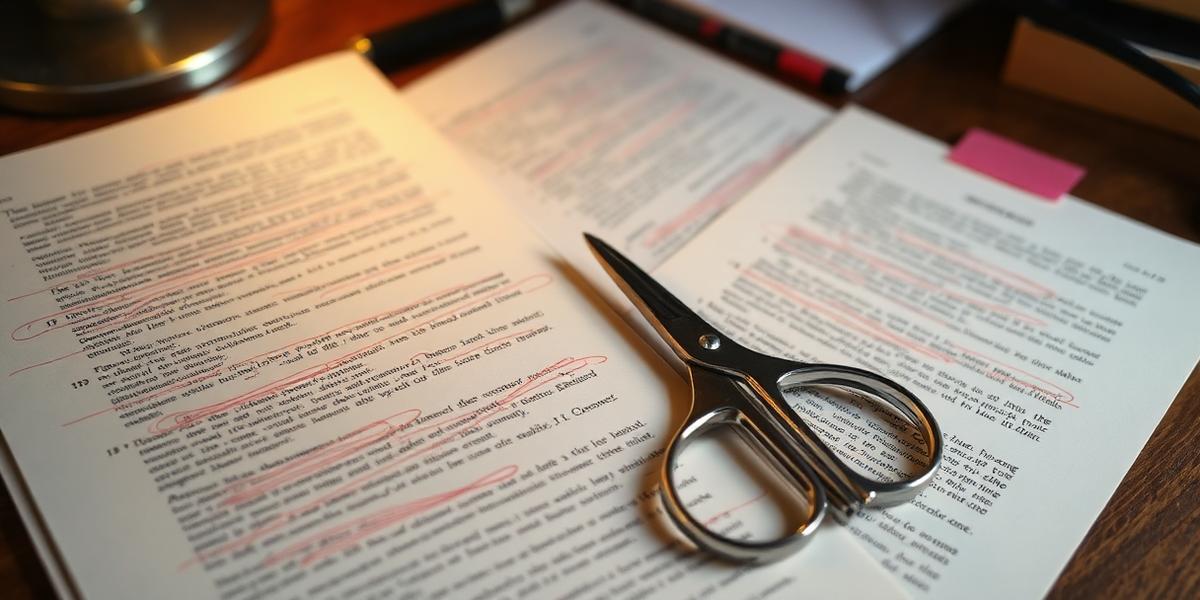
Drafting rewards recklessness. Revision rewards suspicion. Most writers try to run both with the same brain on the same afternoon, and then wonder why the work feels like wading.
The single most useful structural change I have made to my process was accepting that these are two different jobs, done at different times, with different rules.
Pass one: structure only
The first pass is read-only. No editing at all. I read the whole draft in as few sittings as possible and keep one document with a single line per scene: what changes in it.
If a scene's line reads "they discuss the plan," it is a candidate for cutting or merging. Something must change — a decision, a relationship, an amount of information the reader holds. A scene that ends the way it began is a delay with dialogue in it.
At the end of pass one I have a map, a list of scenes to cut, and usually two or three scenes that do not exist yet.
Pass two: the missing scenes
Write the new material before touching the old. This is counterintuitive and it matters. If you polish before the structure is settled, you will defend polished scenes that should be deleted. Nobody cuts their best paragraph. So do not make good paragraphs in places that might not survive.
Polish is a commitment device. Only spend it on ground you have decided to hold.
Pass three: the line pass
Now, and only now, sentences. I work in short sessions because attention for this decays fast — ninety minutes is my honest limit. The questions are narrow: where does the sentence land, is the verb carrying it, can the first four words go, does the paragraph vary its rhythm.
I also keep a running list of my own tics and search for each one at the end. Mine, currently: "just," "somehow," "a kind of," and starting paragraphs with "But." Your list is different and you already half-know what is on it.
Pass four: read aloud, out loud, all of it
Not a scan. Actual speech, all the way through, ideally over a few days. It is tedious and it catches things no other pass catches: repeated words within three lines, dialogue that no human mouth would produce, paragraphs where you run out of air.
Most of my final round of cuts happen here, and they are almost all small — three words, half a clause, an explanatory sentence following a line that already did the work.
The rule underneath all of it
Never do two passes at once. If you are fixing commas while deciding whether the chapter belongs, you are doing neither well, and you will be exhausted by the effort of switching.
Separate the jobs, name which one you are doing before you open the file, and let the other one wait its turn. The draft gets better and, more importantly, the work stops feeling like an argument with yourself.
Stay connected
One teaching on consciousness or ancestral wisdom, one note from the desk, and early word on new books from the Living Archive Series and the Ajarn Shaman Shu collection. No spam, and one click to leave.
Related reading
More from the archive connected to “Revision Is a Different Job Than Writing”.
- Writing Craft & TipsThree Acts Is Not a Formula, It Is a DiagnosisStructure templates get a bad reputation because writers use them as blueprints. They are far more useful as diagnostic tools applied after a draft exists.
- Writing Craft & TipsThe Sentence Is the Unit of TrustReaders do not decide whether to trust you at the end of chapter one. They decide in the third sentence. Here is how I audit prose one line at a time, and why rhythm matters more than vocabulary.
- Book UpdatesThe Third Book Has a Title (and a Cover)After eighteen months, two false starts, and one abandoned first-person draft, the next novel finally has a name. Here is the title, the cover, and an honest account of what took so long.
- Author's JourneyThe Long Middle: Writing When Nobody Is WatchingEveryone prepares you for rejection and for launch day. Nobody prepares you for month seven of a first draft, when the book is too big to hold and too unfinished to show anyone.
- Industry NewsWhat the Backlist Boom Means for New WritersOlder titles are taking a larger share of sales every year. That is not just a statistic about catalogues — it changes what a debut needs to do, and how long a book has to find its audience.
- Writing PromptsFive Prompts for a Scene That Refuses to MoveNot prompts for starting something new — prompts for the scene you already have, the one where two characters keep talking and nothing happens. Each takes fifteen minutes.
- Reader SpotlightsThe Book Club in Flint That Read the Whole BacklistTwelve people, four months, every book I have written, in order. Then they sent me eleven pages of notes. What a group of committed readers taught me about my own work.
- Author's JourneyNotes on Writing in a Noisy YearOn protecting attention, the difference between rest and avoidance, and why I stopped trying to write on the days I was most informed.
Comments
- No comments yet. Yours would be the first.
Keep reading
The Sentence Is the Unit of Trust
Readers do not decide whether to trust you at the end of chapter one. They decide in the third sentence. Here is how I audit prose one line at a time, and why rhythm matters more than vocabulary.
August 10, 2026 · 3 min read
Three Acts Is Not a Formula, It Is a Diagnosis
Structure templates get a bad reputation because writers use them as blueprints. They are far more useful as diagnostic tools applied after a draft exists.
June 13, 2026 · 2 min read
The Third Book Has a Title (and a Cover)
After eighteen months, two false starts, and one abandoned first-person draft, the next novel finally has a name. Here is the title, the cover, and an honest account of what took so long.
August 4, 2026 · 2 min read